I’m coming in a little bit hot with this take, so I’m going to say exactly what I mean at the start, instead of trying to build up to it. That way, no one on the internet can possibly misinterpret or misrepresent it!
Any rejection of generative AI in the creation of art or entertainment has to make a stronger case than simply, “a real human being made this.” You can, and often do, have dozens if not hundreds of very talented people make something that ultimately feeds into the “commodified content” mentality that’s making so many business people so eager to push AI onto everyone in the first place.
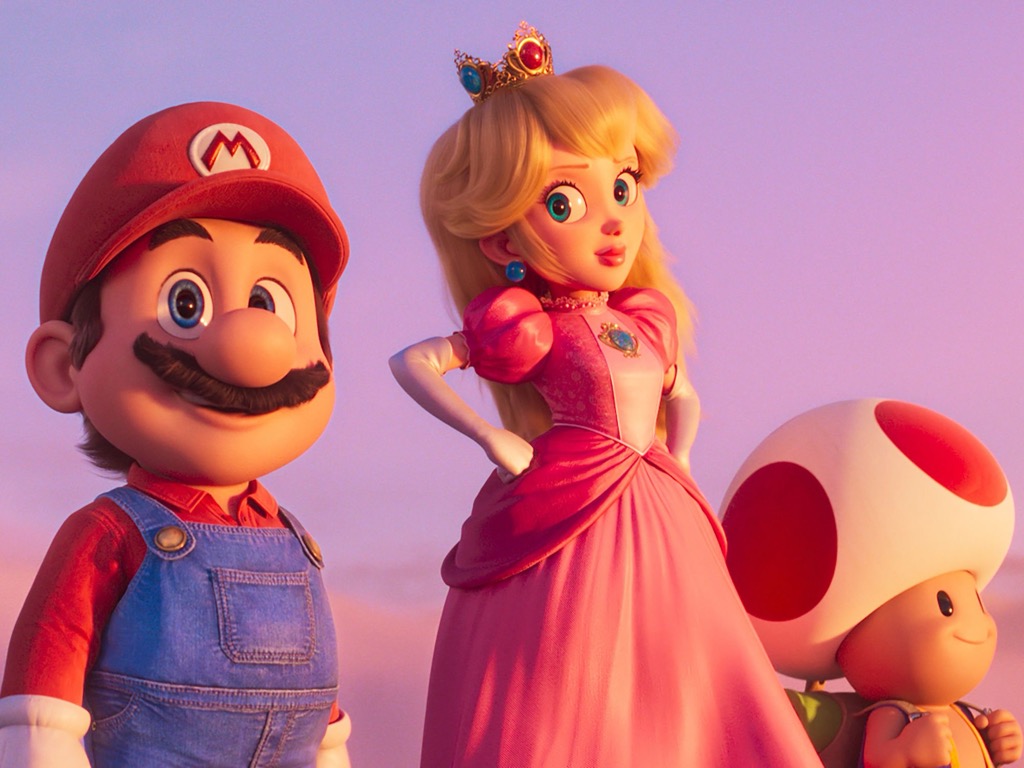
The impetus for this post was discussion around The Super Mario Galaxy Movie. Specifically, someone calling out the complaint that it looks like AI slop, by insisting that comparing it to gen-AI does a huge disservice to all of the people at Illumination who worked on it.
And yeah, there is absolutely inherent value in something simply having been made by a person. Even before you take the obvious skill and talent of Illumination as a studio into account. There is significant artistry involved in taking worlds and characters — even ones that have already gone through decades of refinement and been drawn, modeled, and animated countless times before — and translating them into an animated movie format. Tons of decisions about what works and what doesn’t, what exactly to take from the existing character designs and adapt them for this movie, and likely thousands more moment-to-moment decisions that I’m too ignorant to speculate on.
But then also: what are we even doing here? Can you imagine ten years ago — even five years ago — defending an unabashedly commercial movie release by saying, “it was made by humans?”
The reason I’m fond of the word “slop” as a derogatory rejection of AI-generated content is because it’s all-encompassing. It gets at the heart of why the stuff sucks so much. It’s not just because of the inability to render details correctly. It’s not just because the video can’t retain coherence beyond a few seconds. It’s not just because it’s trained on copyrighted data and decades of people being forced to do CAPTCHAs. It’s not just because it consumes an exorbitant amount of resources, or because it’s driving up the cost of computing resources for everyone. All of that sucks, but even if you could wave a magic wand and make each of them disappear, the root problem is still there.
The push for generative AI is really just the culmination of a decades-long process of devaluing people’s work, expertise, and labor, towards the complete commodification of art. If you find it unsettling that it’s getting more and more difficult to distinguish AI-generated art or video from the real thing, that’s not necessarily a sign that the systems are getting better and better. It’s more a sign that your taste and standards have been gradually chipped away for so long that you think the difference between slop created by humans and slop created by a computer is a meaningful difference. And that is pretty unsettling.
It might not sound like it, but I actually see it as an optimistic take. If there is anything positive to having all of this gen-AI slop shoved on us, it’s that maybe it’s taught us to pay closer attention to the stuff we’re consuming and the stuff that we’re making. I know that it’s made me have a lot more grace towards the stuff I make, simply for having a better appreciation for the process that went into it. Not simply because a person made it, but because I made it.
I should probably acknowledge that I haven’t seen either of the Super Mario movies, and I’m unlikely to until there’s a screening that’s not packed full of members of its target audience, if at all. For all I know, it’s more charming and fun than it looks, and it has touches that justify its existence beyond a marketing campaign.
But that’s also all but irrelevant for the point I’m making, and the reason I’m using it as an example. Everyone knows exactly why these movies exist, and it would be bizarre to the point of nonsense to suggest otherwise. There’s nothing inherently wrong with a blatantly commercial piece of entertainment, and often it gives people a chance to do good, fun, work, but the craft and artistry is still always going to be a happy side effect at most.
Every time I see a trailer for the upcoming Masters of the Universe movie — the second live-action movie capitalizing on nostalgia for a TV series that was itself created for the purpose of selling toys — it feels like spiraling towards an event horizon into a black hole from which no art can escape. It’s important to periodically take a look around and do a sanity check. The balance between art and commerce has always been tenuous; is it shifting so far into the category of commerce to the point that it no longer gives any opportunity for actual creativity?
We’re already in a media environment where fans use terms like “IP” without a second thought, as if that were a normal way for normal people, not marketing types, to talk about art and entertainment.
So whether these movies actually turn out to be good is almost as irrelevant as whether they were actually made without generative AI. The mission statement is already clear: they exist to make money, and everything else is secondary. A project can fail the Turing Test and still be part of the years-long process of training audiences to appreciate Commodified Content, to dismiss any vestigial ideas about there ever having been a balance between art and commerce in the first place. Really, all the push for generative AI does is help speed that along.
Leave a Reply