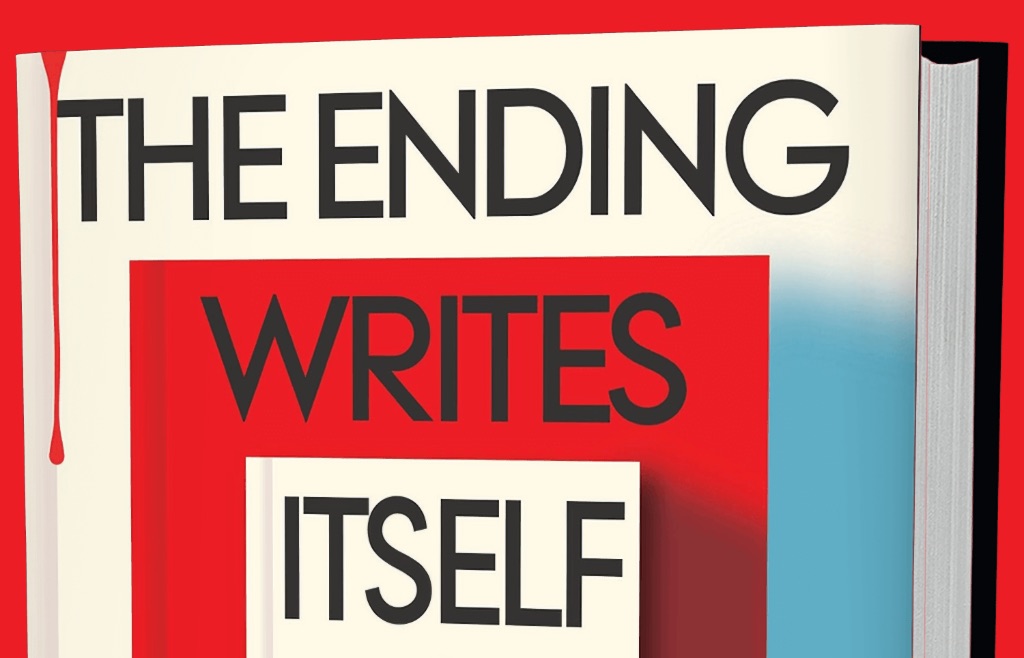
Book
The Ending Writes Itself by Evelyn Clarke
Synopsis
Arthur Fletch has become one of the most successful living authors, after several world-wide bestselling mystery thrillers. Now, as readers are anxiously awaiting the final entry in his most successful series, a group of struggling or aspiring authors are invited to an exclusive salon on Fletch’s private island in Scotland.
Soon after they arrive, they learn they’ll all be locked in competition to write their own conclusion to that final book. The selected winner will receive enough money — and an ongoing book deal for future works — that could change their lives forever.
Notes
I’m impatient with my own reading pace anyway, and I’ve been especially struggling with it this year. (Which is why I’ve only finished four books, and it’s already mid-July). So it was difficult to gauge whether this book wasn’t to my taste, or if it were just my own impatience making my hypercritical.
The biggest issue is that the book spends its first half just establishing its characters and giving each of them a dedicated, lengthy internal monologue. Most of them don’t have a ton of complexity — on the surface, they seem like this, but they’re actually like that — and all of them have very pointed opinions about the publishing business.
It all seems extremely meta and inside-baseball, with stereotypical assumptions about the different genres (each writer specializes in a different genre of fiction) and tons of self-inserts from the book’s author, Evelyn Clarke. All about the undauntable passion for writing, the bursts of inspiration that invigorate writers, and the struggles of pouring your heart and imagination into what’s ultimately a deeply unfair and superficial business.
I even had to take a break to look up a description online to verify what genre the book is; I had gone in expecting a mystery thriller, but the first half is neither. It was only then that I learned that “Evelyn Clarke” is a pen-name for the duo of V.E. Schwab and Cat Clarke. In retrospect, it should’ve been apparent, since “one” of the book’s author characters is actually a husband and wife writing under (literally) a Penn name. But knowing that made the rest of it make sense, reframing the book’s first half as a kind of parody/gripe session about what it’s like to work in publishing.
Once it actually turns into a mystery thriller, things pick up. And having spent so much time with the characters does give a better appreciation for their different voices and more empathy for what’s happening to them — if it had jumped straight into the action, they likely would’ve seemed like very shallow caricatures in an extremely contrived story. It’s engaging, and it becomes a page-turner in its second half. But I did still find myself pinching the bridge of my nose at the repeated use of cliched mannerisms.
Verdict
Once the book settles into being a thriller, it works pretty well, and the characters actually start to come to life. (Ironically). It is a little funny that it laments how publishing is driven by chasing trends, while this would seem like a perfect example of chasing the “meta mystery” trend that I’ve seen more and more often since Magpie Murders. In any case, I enjoyed it enough to be engaged, but I wish it could have more seamlessly blended the parts that advanced the plot with the parts that advance the love of the art (if not the business) of writing.