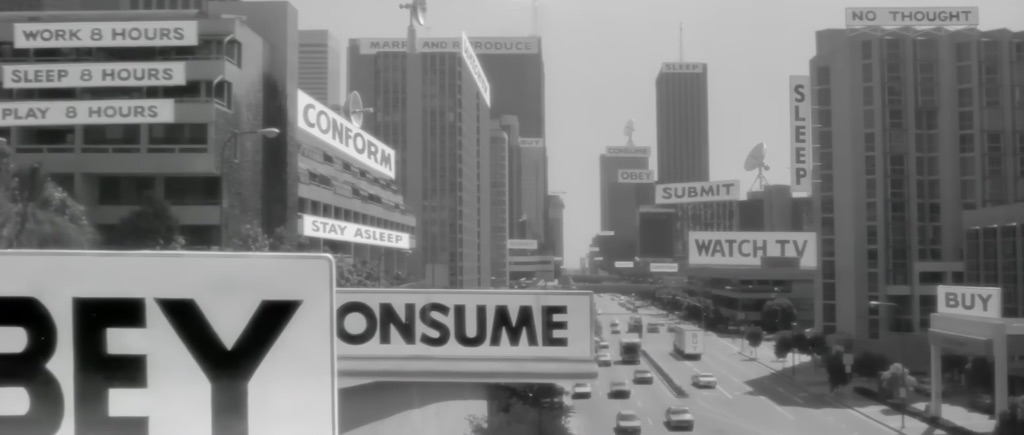
Last week, there was a short post on Aftermath calling out coverage of a video game industry analyst speculating about the sales of the new game Saros. The title of the post is “Nobody Needs To Know What An Analyst Thinks About A Singleplayer Video Game’s Sales. Nobody!” and yeah, I absolutely agree with the sentiment.
I agreed so much that I’d assumed it was so straightforward as to be unarguable: thinking about sales numbers or the business side of art is a lousy way to think about art. But there was a surprising amount of push-back in the responses. Variants of “um actually, I want to know more about the industry, thank you very much.”
And I’ve been resisting my natural impulse to be a smart-ass about it, because I think it is a perfect example of a frogs-in-boiling-water situation. I know that I’m not immune to propaganda. Decades if not centuries of blurring the lines between art and commerce have a subtle influence on us that we might not have fully noticed. But on the other hand, when a frog mentions, “hey, anybody else notice how warm it’s getting?” and the others respond with “I happen to be perfectly comfortable, how dare you criticize me for my warmth, etc,” it crosses the line into arrogance.
To be clear, I totally understand the resistance. The post linked above is a rant1I did mention it was on Aftermath, after all, so I don’t necessarily agree with all of it — for instance, I’m a little more comfortable with enthusiast sites talking about player counts, as a separate metric from sales, as something fans might be interested in. Knowing roughly how popular a game is or isn’t can make it feel more like a social experience. Kind of like how it’s a different vibe to be watching a movie in a packed theater vs being one of only a few people in the room. Even if you’re not directly engaging with the rest of the audience, there’s still a sense of being part of a much bigger group all engaging with a piece of art or entertainment.
But whether it’s sales, or player counts, or any other industry metrics, the aspect that Luke Plunkett is strongly objecting to is the crossing of streams: the parts that affect your enjoyment and appreciation of the game, vs the parts that are about marketing and selling the game. What is that your business? It’s all stuff that most players shouldn’t care about at all, because you have literally no control over it, you’re almost certainly not getting accurate information in regards to anything that matters, and it has no bearing on the game or your enjoyment of it.
Still, there’s this insistence that knowing sales figures or the behind-the-scenes dealings of publishers and developers is harmless at worst. Or even that it’s a good thing, because it enables us to make informed decisions. “What’s wrong with wanting to support games that I like?”
To explain why it’s a problem, you have to take a step back and see where it’s happened elsewhere. I can remember when the popular discussion around movies gradually shifted around the mid 1980s, when “entertainment news” became a more visible thing. A poster on Bluesky pointed to Entertainment Tonight as a prime offender for taking the kind of trade talk of Variety and making it mainstream. You’d start hearing more and more about box office, opening weekend numbers, movie budgets, actors’ salaries, and the like. It didn’t take long for lay people to be aware of that stuff as well.
And what resulted was that people gradually started thinking about movies as product as much as art.
If you’re the type of person who’s not particularly bothered by that: fair enough. But think of it like a missed opportunity. How much more interesting would the world be now, if normal people’s discussions about film were more like conversations between directors, instead of conversations between producers and studio executives?
And it’s the same with games. I’m not (necessarily) saying that there’s nothing interesting about the jobs of producers or marketing people, but that the parts of their jobs that actually deal with selling games is the least interesting part of the entire process. And more significantly: the part that’s the least relevant to any player.
Because by design, it’s a mindset that doesn’t just treat art as a commodity, which would be bad enough. It treats the community around art, our appreciation and discussion of it, and its cultural resonance, as a business transaction. It’d be an incorrect stereotype to say that no producers, marketers, or studio execs have any interest in or understanding of the creative side, obviously. But the parts of their jobs that factor into sales numbers have nothing to do with the creative side.
But what about the more benign, or even well-intentioned take: “I want to know how well this game is selling, because I want to help support it.” It makes sense for all of us who’ve spent our lives being told that we have the power to vote with our dollars. I’ll buy a game or pay for a movie ticket to send a signal that I like this and want to see more of it, and to enable the creators to keep doing good work. And I might be more inclined to tell other people about it if I know that the project is struggling or “not meeting expectations.”
What’s the problem? How could anybody possibly object to that? Here’s how:
It’s overstating your own influence.
Unless you’re writing for a media outlet, or you have an otherwise oversized influence in the business, your sale and even your recommendation is going to be little more than a rounding error to most developers and publishers.
The game that sparked the discussion, Saros, is estimated by the analyst to have sold 300,000 copies. At that scale, reducing your engagement with a piece of art or entertainment to a number — when that number is maybe around a dozen sales at most — does nothing of substance for the game, but has irreversibly affected how you think about it.
For a smaller, independent game, that dozen sales could make a significant, tangible difference. In that case, you really are helping out a creator who doesn’t have the resources for a marketing push. But for a company like Sony, or even a studio published by Sony, that’s simply not your job. Your sales might help cover a few hours’ worth of salary for the paid marketing teams whose job it actually is.
And as with all of this: I get it. I’m too cheap to pay for analytics on this blog, and I have no certainty that anyone else is reading it beyond the one person who’s reading it right now. But even keeping in mind that I’m just trying to share thoughts about stuff I like, I still let that Other Voice creep in occasionally. The voice that says I’m helping guide purchasing decisions, instead of just saying “this is cool, you might like it.”
It conflates financial success with cultural resonance.
I mentioned that I’m more comfortable with player count as a metric than sales, because for lack of anything better, it at least gets close to the thing I care about: are enough people seeing and enjoying this cool thing?
It might not seem like much of a distinction, but I think it makes a ton of difference. People online have been commenting on the Avatar franchise for years, saying that the movies have made obscene amounts of money, and yet they have no cultural resonance beyond a Saturday Night Live short making fun of their font. I think the key takeaway from that is that the franchise is doing fine financially, but I have never once heard or read anyone say anything particularly interesting about the movies themselves.
Which means simply to stop thinking of sales and substance as having any meaningful correlation. If you see enough great stuff that fails to break even, while uninspired stuff becomes a huge breakout hit, you start to realize that the business of selling entertainment is so far removed from anything you actually care about that you might as well just accept that business and art are almost entirely unrelated.
It perpetuates the idea that your purchase is the thing that’s meaningful.
Part of people’s objection to the “stop caring about sales numbers!” argument is that it feels like accusing people of mind-crimes. Because it kind of is. It’s a subtle shift in thinking that accumulates over and over again — each time, almost imperceptibly pushing you a fraction of an inch towards the line between “fan” and “consumer.”
Few people are actually buying a game or a movie ticket mainly to support the creators. But thinking about it in those terms helps cement the idea that your purchasing decisions have ripple effects, giving it more and more significance in your head. “I’m not just buying this because I like it; I’m helping.”
And again, for smaller developers, it can actually help! Even then, I’d encourage everyone to make sure the two ideas remain completely separate in your mind: I like/dislike this game, and I’m contributing money to developers.
This is something I’ve been going on about for years and years, ever since I saw people online saying that their refusal to buy a chicken sandwich was a statement about their support of marriage equality, or their purchase of a chicken sandwich was a statement about their opposition to gay rights. I still insist that it’s a statement about nothing other than “I want a chicken sandwich.”2The whole question is now mostly irrelevant, by the way, because Popeye’s sandwich is so much better.
This is usually interpreted as my being against collective action, but I’m actually not. I’m just saying if you’re going to claim to stand for something, really stand for it. At the time I’m writing this, I’m in the middle of refusing to use the services of at least four different companies that I used to rely on heavily — I’m 100% in favor of making responsible purchasing decisions. I’m just strongly against assigning much significance to those purchasing decisions, especially in comparison to simply speaking out.
Even in the best case, it has only short-term effect.
Over the years, we’ve been shown several examples where Kickstarter campaigns, fan letter-writing campaigns or word-of-mouth campaigns helped bring back projects that were on the verge of cancellation.
Of all the ones I’m familiar with — correct me if I’m mistaken — the campaign didn’t “help a show find its footing,” or lead to ongoing success. It was always more like a last gasp. Occasionally that last gasp was better than the original, but it still highlights the fact that there’s a huge difference between a sustainable business and a great work of art, or even a good piece of entertainment.
Again, just to use Saros as an example, knowing next to nothing about the game or the studio that made it: assume that the “let’s collectively save Saros” campaign works, and the game becomes a hit. We like to imagine that it’s that simple, that the sales will enable further development, and send a message to Sony that people want more of this. But there are dozens if not hundreds of different factors going into whether a project gets greenlit, much less makes it to release. Whatever factors went into making it so that a game with around 300,000 sales3If we can even assume that number is correct, which is the other danger of paying too much attention to “industry analysts” is somehow not sustainable, what’s keeping that from happening again on the next project?
Keeping businesses in business is not your business! In fact, it turns the entire model inside out. The entire point of having a “business side” in the first place is to figure out the economics so that creators can make the stuff you like. Not for audiences to stage a bail-out whenever they make decisions that lead to their not making as much profit as they’d like to be making.
Especially since over the past year, we’ve seen more and more examples of studios with hit games getting dissolved, and companies with huge revenues still doing massive layoffs, it sure seems like we should’ve caught on that “our purchases make a difference!” is more or less a scam.
Sometimes talented people who have great ideas are just plain bad at business.4See: https://www.spectrecollie.com. Sometimes the right business decisions still don’t result in a viable product. Sometimes, businesses really are just greedy and motivated only by shareholders. We don’t really have any input into that or control over it.
And perpetuating the idea that we do is like yelling at the audience and blaming us for killing Tinkerbell because we didn’t clap our hands and believe hard enough. Being a “responsible consumer” means having a realistic understanding of what the boundaries of the transaction are, exactly.
Do you want social media influencers? This is how you get social media influencers.
The main reason I feel strongly about all of this to argue and then write about it is probably because I’m a subscriber to YouTube.5Substitute Instagram if you don’t use YouTube often enough to see the trends.
I stopped watching any live content years ago, in favor of YouTube and streaming services. At this point, for me it’s just that and Dropout.6Which remains unimpeachable IMO, an excellent example of how to do it right. A huge part of that was because the ad breaks just became intolerable.
In the years since I subscribed, YouTube and creators of videos on the platform gradually adjusted to the “new” model by making sure that ads aren’t just limited to ad breaks. My subscription means that I don’t see the explicit ones inserted by YouTube, but I still regularly see the creator’s own sponsor break, and then at the end, the plug for the creator’s Patreon.
I don’t begrudge creators making their money7Note that this is not true in the slightest. Every time I see a video of people going on their fifth cruise of the year, or buying a new electric car, or showing off the huge warehouse space they just bought for the purpose of becoming a studio, and it has over 100k views, a sponsor break, and ends with a plug for their Patreon, I turn to my husband and say “we’re in the wrong business.”, but I do begrudge how much it’s put the business side so much at the forefront of everything. It’s actually made me miss the ads I grew up with, since at least they made a clear break between the show and the ad. This makes everything feel like the “good old days” of classic TV, when Lucille Ball or the Flintstones would take a moment from their broadcast to sell you cigarettes. But this is often for “shows” that are around 15 minutes long.
Not to mention that the content itself is so often trying to sell me something. Based on my interests, I get: here’s a theme park visit, here’s a cruise, here’s a new product, here’s a new video game, here’s my “first impressions” of a movie releasing this week which will be followed by more in-depth non-spoiler and spoiler reviews. Even when the creators disclose whether they got a product for free, or they were “hosted” on a trip, that just addresses (mostly) the ethical concerns. It doesn’t change the fact that it’s all essentially advertising. And I don’t even watch unboxing videos!
I’m not even saying it’s sinister; it’s just the nature of the platform. Creators doing it as their full-time job need to cover the Flavor of the Moment, whether that’s a new movie, or a TV show, or a computer, or a smart phone, or a journal, or a travel destination, etc. That’s how they get enough views to be sustainable. But it also means that even when it’s completely, 100% sincere, the content has to be driven by marketing trends. You simply can’t stay in business just talking about the stuff you like.
The end result is that it feels like someone is always trying to sell me something. It’s inescapable. Even when it’s coming from video creators that I like and more or less trust, there’s the lingering question: “is this whole thing really just an ad?”
And in case this seems like an old man going off on an unrelated tangent to complain about something completely unrelated: my point again is that a subtle shift in mindset, repeated over and over and over enough times, can end up in an extreme place you never even realized you were going to.
It’s the old “road trip” analogy: going on a road trip means you’ll inevitably have to stop at gas stations8Or EV charging stations. Not back on my bullshit; still on it., but visiting gas stations aren’t the point of the trip. At the time it was coined, it was about the difference between sales enabling creators to make a video game, and video games being designed to maximize sales. The business should enable the content, not drive it. But now, it’s gone even further: the business is the content.
While I’m at it, another thing that might seem like a tangent, but I see it as directly related: businesses asking if you want to make a donation to some charity while you’re making payment, or increasingly common these days, inviting you to “round up” your purchase to make a donation to charity.
This seemed like such an obvious no-brainer of a win-win situation that I never put much thought into it. I pay a negligible amount, the company handles the donation for me, the charity gets the sum of all the tiny amounts that ads up to a sizable amount of money. Just like in Superman III and Office Space, but for good.
The part that I never realized until a helpful militant anti-capitalist social media account pointed it out: one part of that whole transaction is “winning” more than the others. Sure, the charity still gets money they wouldn’t have otherwise. And I’ve contributed an amount that I would barely have noticed, so it’s hardly a sacrifice. But the company has now made a big donation that will result in a tax write-off, plus whatever PR value they get from saying they sponsored this charity. They could have just donated the money from their own profits, but by treating it as a fundraiser, they’re getting some of the benefit of a donation from using your money.9In practice, is it even enough to cover credit card transaction fees? I have no idea. But in any case, it’s your money being funneled through layers of indirection before reaching its desired destination.
The end result is the same, so what’s the big deal? Like just about everything in this post, it’s a question of mindset. The whole balance has been shifted in favor of the big companies. In a world with proper boundaries, it would be three separate transactions: I pay a company for its product, a company donates its money to charity, I donate my money to charity. The entire concept of altruistically giving money to help people has now had corporate accounting insert itself as a man in the middle.
And the reason this came to mind as related to the topic: I get the dopamine hit of “I did some good today!” by giving an extra 36 cents to McDonald’s while buying a Big Mac. That’s not going to stop a charity-minded person from making a larger, separate, donation of course. But it does put into relief what an enormous chasm there is between my transaction and the actual impact it’ll have. And it does feel like yet another example of modern companies trying to blur the line between “buying something” and “making a difference.”
So again, my reason for writing this much about something that ultimately doesn’t matter is not to say “if you buy video games to support the creators, you’re wrong and you should feel bad.” It’s just to encourage people to stay mindful and set boundaries.
Resist letting business creep its way into your appreciation of and engagement with art. Resist thinking of purchasing decisions as being your voice, since your actual voice can be a lot more impactful. Support independent developers, where your purchases and recommendations actually do make a big difference. Maybe stop being concerned with business decisions that you have no real investment in10Or at least if you do, you should probably be disclosing them!, and no control over. And emphasize talking about games and other art and entertainment as cultural artifacts, discussing the things you like or don’t like about them, instead of talking about them as product.
Comments
3 responses to “Buy-Curious, or, Being a Good Video Game Consumer in the Age of Influencers”
A pithy summary of several sections of this article that I enjoy trying to bang like a drum: Vote with your wallet means that you agree that the rich deserve more votes.
(It underscores a lot of what currently is wrong with current politics, too. We’ve got two parties acting like they run on bake sales and instead controlled by billionaires, but they need you to be complicit in the fake bake sale so that they know you agree that billionaires’ votes count more.)
One tangent perspective though from the main argument that appreciate as a valid concern is the “archivist’s dilemma” in games right now. If you are a film collector, for the moment you can still rely on a physical disc copy of a movie from are least one company and a couple preservation firms exist including but certainly not limited to Criterion. With games, physical media is almost entirely dead, there’s maybe GOG as a Criterion wannabe (GOG Patrons might make things better?), and even single player games are no longer immune to multiplayer concerns like “what happens when the servers get turned off?” (That might be DRM servers. That might be “delisting” from stores like Steam, which leaves the game playable on most stores if you already bought it, usually but also not always. Also game engines like DICE’s Frostbite are architected to always be client/server even for single player games. Bioware’s Anthem being a key example where the single player parts of the game didn’t survive the multiplayer shutdown.)
Sales numbers are still a bad proxy for “how long do I get to rent this game in this economy?” and “is this really single player or is it ‘single player’?” type questions but as pointed out “active player counts” don’t really exist for single player games.
It must have been hard to be a film or TV fan in the era where film stock was often immediately destroyed or reused. I don’t entirely blame game players for being concerned with how much games feel like expiring rentals right now and that getting in the way of appreciating the art. I know the answer isn’t talking more about sales figures and is probably more about talking archival and digital estate planning and “renter’s rights”, but I don’t know how to teach game players to ask those harder questions more and worry about sales numbers less.
Don’t have much to add besides those are good points. The issue of what are single-player games still requiring servers is a perfect example of how little control or say the audience has over the decisions of companies. It’s just plain consumer-hostile and art-hostile, as you say. And players should understand that they don’t have any obligation to keep companies with hostile business models in business.
Early days Telltale had a somewhat similar issue, where they had to (and did, to their credit) assure players that there’d still be a way to get the games if the company went under. But there was still the same issue of everything being licensed content, which ended up where we are now, with the rights for the games being spread across multiple different owners, if the games are even available at all.
Yeah, Telltale was on my mind, too. That early policy of “if you buy digitally directly from us, you can get the physical disc for mostly just shipping costs” was somewhat unique and which games I failed to do that on is an interesting set as is the set of games after that policy ended.
I was also thinking about GameTap. That was one of their pitches as a “TV channel for games” that they had a long term interest in archival because you can’t syndicate or reschedule TV shows you failed to archive, or games in GameTap’s case. They didn’t live long term enough to make good on some of those long term archival goals. Modern successors like Xbox Game Pass don’t have any such goals in their public marketing at all.
That last part has even been relevant in some of the controversial discussions about Mixtape. Mixtape is a recent “indie” single player game with the needle drop budget of an expensive film. Its publisher is Annapurna which is a large film studio (Megan Ellison’s) so that kind of checks out. Annnapurna claims they licensed those needle drops for a long enough time no one should worry about the game delisting anytime soon, but between Annapurna’s previous controversies (hiring a known sex pest to [again] lead the games group causing a massive walkout of a key group of videogame producers that had helped publish award winning games, some of which got delisted after the walkout) and the Xbox Game Pass exclusivity gave Mixtape so much of an impression of being one of the one-season Netflix shows designed to win a lot of awards season buzz and likely to be delisted a year or two later. A lot of people think Mixtape was a “designed to be delisted” game. I enjoyed it, but it was just edgy enough (with an expensive enough soundtrack) I could see it getting awards, and yet also just bland enough to be a forgettable binge watch, I’ll forget about as soon as it leaves game pass, so I can definitely appreciate why some of controversies about the game got so loud. (The other controversies, beyond the music budget and the publisher, are accusations of heavy AI usage in art and development and the implication that for a game built on 90s nostalgia it may not have had developers who actually lived through the 90s, such as a cassette minigame that violates the real world physics of how a cassette worked.)
I realize with Netflix being an easy target for that analogy and also thinking about Spotify some of the archival problems are becoming a concern again in music and film. It’s not just single player games, unfortunately.