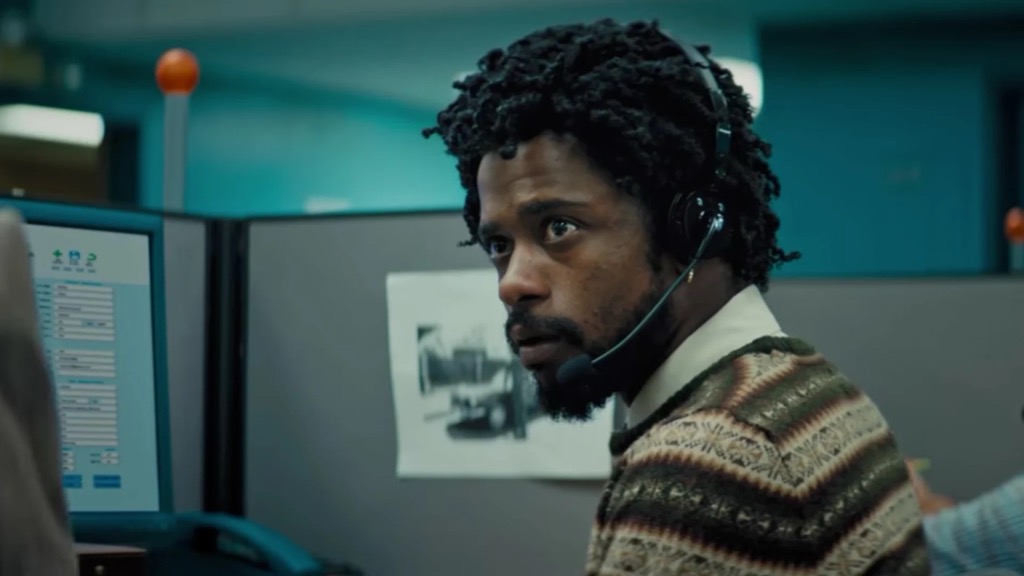
I’m very late to Boots Riley’s first movie Sorry to Bother You, but for what it’s worth, I’ve been intending to watch it for years. I missed it in theaters, but bought a copy as soon as I started hearing all the buzz around it and getting recommendations from friends and family.
I was never in the mood to watch it because I thought I knew exactly what it was going to be: a feel-bad comedy. Funny and inventive, but also with the kind of edge that’d leave me feeling helpless and/or guilty afterwards. I think at the time, I was living in a gentrified part of Oakland and working for a tech company in San Francisco, so I expected I’d spend the movie laughing nervously that I was at least part of the problem.
The movie is set in a just-barely-alternate-reality version of Oakland, and it stars LaKeith Stanfield as Cassius “Cash” Green, an unemployed guy who’s feeling broke, directionless, and worried that his life and legacy aren’t going to amount to anything. He gets a job as a telemarketer, where he soon discovers he’s got a unique talent: he’s got an eerily effective “white voice” (voiced by David Cross). An older co-worker (Danny Glover) explains to him that it’s not just code-switching or affecting a voice, but capturing the whole essence of privilege: comfortable, bills paid, nothing to worry about. Cash turns out to be so good at it that he quickly finds himself making his way into the upper echelons of the company.
Sorry to Bother You‘s targets are all over the place: capitalism, code-switching, assimilation, racial privilege and stereotypes, unionizing, scabs, wage theft, housing insecurity, social media, trash TV, and giant corporations recreating indentured servitude. Plus a lot more that I either missed or I’m forgetting. The amazing thing is that it doesn’t pull its punches, but it never feels preachy, and never lets it get in the way of being really funny.
Just one example that stood out: Cash and his friend Sal (Jermaine Fowler) are having a stand-off on the street outside the telemarketing company, because Cash is planning to cross the picket line and make his way to become a Power Caller. And it’s just an escalation of the two of them complimenting each other and wishing each other well, in more and more threatening voices.
In the moment, it just feels like a funny, slightly surreal scene. But it’s also the core of what makes this movie such an insightful surprise. The systems that are keeping everyone poor and desperate perpetuate themselves by giving people easy targets, pitting people against each other when they’re actually on the same side. Cash and Sal really do like each other, and they sincerely want to see each other succeed.
Another remarkable thing is how it doesn’t obscure its messages under too many layers or abstractions, but it still never feels too on-the-nose. One of its most profound observations, a character just says outright: “If you get shown a problem, but you have no idea how to control it, you just decide to get used to the problem.”
The movie that I’d been expecting would have stopped right there. It would have presented a huge system of interrelated, oppressive systems that keep everyone down, and then showed a protagonist try to do the right thing and not just fail, but have all their efforts absorbed into the system and make it more powerful. It would’ve just said, “this is insurmountable, you’ve got to do something.” And then, “hey, back off, this is satire. We don’t have to provide answers, we just have to show you the problems.”
But just like Sorry to Bother You isn’t content to let preachiness dull its comedy, it also doesn’t let the size of the problem turn into defeatism. It’s hopeful. It insists that there’s nothing naive about believing in the power of collective action. And just plain meeting people where they’re at, and helping each other out.
It’s just great, and I wish I’d watched it a lot sooner. There need to be more socially-conscious movies about the power of collective action that also have a guy panicking that his dick’s gotten too big.