St Vincent’s music doesn’t always hit with me, but when it does, it hits hard. Actor is one of my top 10 favorite albums, even though I don’t particularly like half of the tracks on it.
A huge part of that comes from Annie Clark treating it like a concept album, a bunch of songs loosely related around the idea of a fairy tale gone wrong. It’s more explicit on some tracks than others, but there’s a consistent theme of darkness roiling beneath the peaceful, idyllic surface. And more interesting to me, as suggested by the title, repeated themes of deception, repression, and keeping up appearances.
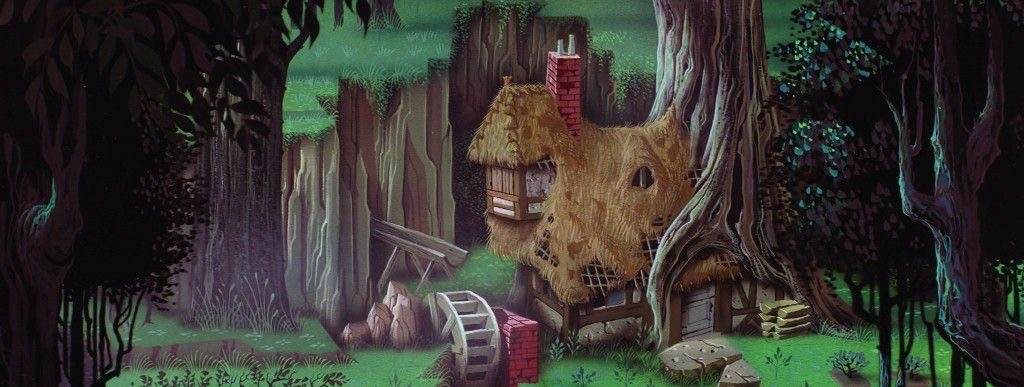
But I think what made it hit so hard with me was Clark’s looking to fairy tale music as inspiration. In interviews, she called out the swirling music of Sleeping Beauty in particular. The most recognizable is probably “Once Upon a Dream”.
Listening to that music again now, for the first time in forever, gives me a greater appreciation for how much is going on in Actor and in Sleeping Beauty. The movie was already referencing something that was decades old by the time it was made, iterating on the formula that built the studio, not just by commercializing it, or solidifying the “Disney style” (although there is plenty of that going on too), but by bringing fine artists to it. It’s easy to think of Disney as being a straight line from Snow White to The Little Mermaid, simplifying and streamlining every aspect of both storytelling and production design, making everything more uniform and conventional. It’s good to be reminded that there was still a push to be unconventional and experimental at that point within the studio’s history, and that philosophy wasn’t just limited to Fantasia and then abandoned.
But I also realized that the music itself has a specific style, and as somebody who’s ignorant of music history, I can only call it “mid-century orchestra.” Very specific arrangements and choice of instruments, each with a very specific but still immediately recognizable connotation. (e.g. “Music for small animals causing mayhem.”) As somebody who’s been going to the Disney parks my entire life, it’s so ubiquitous that I’ve grown to just think of it as “music,” similar to how some Americans insist that they don’t have an accent, simply because the American accent is so familiar to them.
So I think with Actor, Clark was drawing attention to what the music itself was doing. Obviously, there’s the most recognizable sense of subverting a fairy tale with a chorus repeating “paint the black hole blacker.” But it wasn’t just parody or pastiche, either. It’s an acknowledgement that there’s genuinely interesting stuff going on with this music, and the way it can instantly trigger an emotional response.
My favorite track from Actor is “Black Rainbow,” and I love hearing it years later, from a live recording performed at the Royal Albert Hall. I definitely am not claiming that “I was a fan before she was popular,” but it is satisfying to remember first hearing the song on the album (which Clark said she initially did completely with GarageBand), and then as part of a five-piece band on Austin City Limits, and then finally with a full orchestra. That most powerful moment in the song getting more and more powerful with each new arrangement, that high-concept song about depression and rage going from alt-rock fairy-tale subversion to a full-on fire-breathing dragon.
Another thing I never noticed about Sleeping Beauty until today is that none of the characters, including Aurora/Briar Rose, cast shadows. So I’ve also got a new appreciation for Actor asking, “what if she does cast shadows, but you just can’t see them?”
