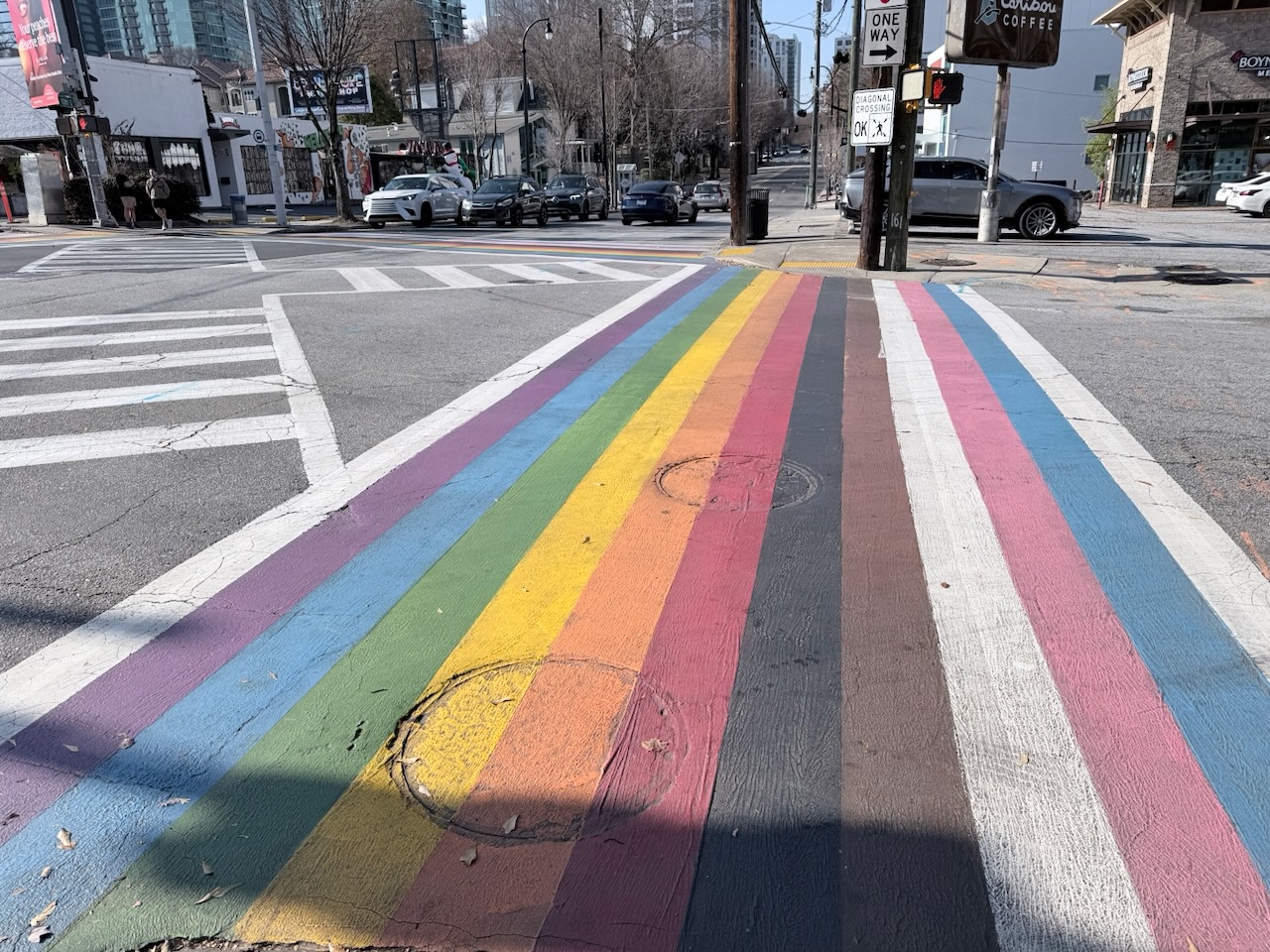
As we’re approaching the end of Pride month, I’m thinking about a simple idea: progressive and inclusive ideas about gender identity, gender expression, and sexuality benefit everybody, not just the most marginalized. It’s similar to the “curb cut effect,” where universal design has the side effect of helping everyone, not just the people most affected by it.
There’s been pushback against the idea of the curb cut effect itself, boiling down to the argument “why not just help disabled people just because it’s the right thing to do, without having to justify it by how it benefits everyone else?”
That’s valid, but it misses the point of the original argument. It doesn’t mean defining accessibility in terms of how it can also help non-disabled people. It means rejecting the entire idea that accessibility and inclusivity are a zero-sum game that requires sacrifices from the majority to benefit some special interest.
There’s even more pushback against the idea of talking about Pride in terms of how it affects straight and cisgender people. That’s also valid, and it’s also why I think it’s useful — at least at the end of the month — to have a more expansive and inclusive idea of what Pride is, exactly. Not in the sense of “won’t someone think of the straight people?!” but in the sense of reminding yourself how much better it is to have a life free of hang-ups.
I’ve never thought at much depth my gender identity, and rarely consciously think about my gender expression. But there have been many points over the years where my old hang-ups and conservative tendencies have intruded on my happiness, made me wary to try things that are absolutely inconsequential.
In high school plays, I was more concerned about wearing makeup in public than singing in public1Or appearing on stage in my underwear, which I was happy to do. It was over a decade after I first pierced my ear before I was comfortable wearing two (or more) in public. I never tried growing my hair longer until it was already gray. I spent a long time wondering whether I was a nail polish guy and didn’t attempt it until my late 40s.2I am not, but I’m glad I at least gave it a shot.
No doubt there are plenty of people out there who think it’s absurd that anyone, much less a guy who’d already gone through the process of coming out, would still be hung about any of this inconsequential stuff. And there’s a reason for that: it is absurd.
And if it’s an absurd waste of time to be hung up about just trying stuff that is of no consequence, then how much more absurd is it to have to struggle with the things that do actually matter? Your sense of who you are, how you express yourself, gender constructs you choose to adopt or reject, who you choose to build your life with, who you choose to explore your sexuality with?
As the years have gone by, my reaction to prudish people has transformed from defiance, to sympathy, to pity. Life is just plain better when you’re not wasting any thought on how you’ll be perceived by other people, denying yourself happiness, or seeking other people’s approval. Everybody should get to live like that.
And it’s not just better without seeking other people’s approval, but without having to demand it, too. It’s a good thing to win a battle for your rights, your dignity, and your equality. It’s even better not to have to fight such a stupid battle in the first place. To dignify stupid or self-serving arguments by treating them as if they were worth your time. To not have to give a second thought to any disphit trying to argue against Pride or the ideas behind it, because your life is proof that they’re wrong.
Even responding to bad faith “but why isn’t there a straight pride month?!” nonsense as if it were anything other than a waste of time gives it more respect than it deserves. Like arguing with flat earthers. And if you repeat it enough for long enough, you’re framing your own happiness as if it were a battle to be won, instead of a fundamental entitlement.
Abstract shifts in mindset are all well and good, but we are of course living in a government that’s still doing real and immediate harm against trans people. And centrist Democrats have betrayed us all by redefining inclusivity and equality as showing compassion for bigots, at the expense of the people who are being most persecuted. The battle has been forced onto people who don’t deserve it. Some resources to help are the Transgender Law Center and the Trans Lifeline, and there are probably ones more specific to your own community.
It makes me furious to see people forced into the position of having to justify themselves and defend themselves, as if their existence is at the whim and discretion of bigoted strangers. I’d call on everyone to call it what it is: bigotry. It’s not an argument with two equal and opposing sides, because it’s nothing that deserves compromise. And when, inevitably, opportunistic politicians and their culture wars move on to a different target to persecute, it will have been for nothing and changed nothing. It will have damaged lives and threatened people for no reason.
But in a better world, people wouldn’t have to waste their lives fighting destructive political battles and could instead think about shifts in mindset. Where Pride as a celebration doesn’t mean complacency, but instead a realization that we’ve already won just by taking part in it. That our happiness isn’t some special interest but a fundamental entitlement, and demanding equality isn’t asking for indulgences.
And that everybody would be happier if they were a little gayer, a little less concerned about gender conformity, a lot more open, and a lot less hung up about other people’s approval.