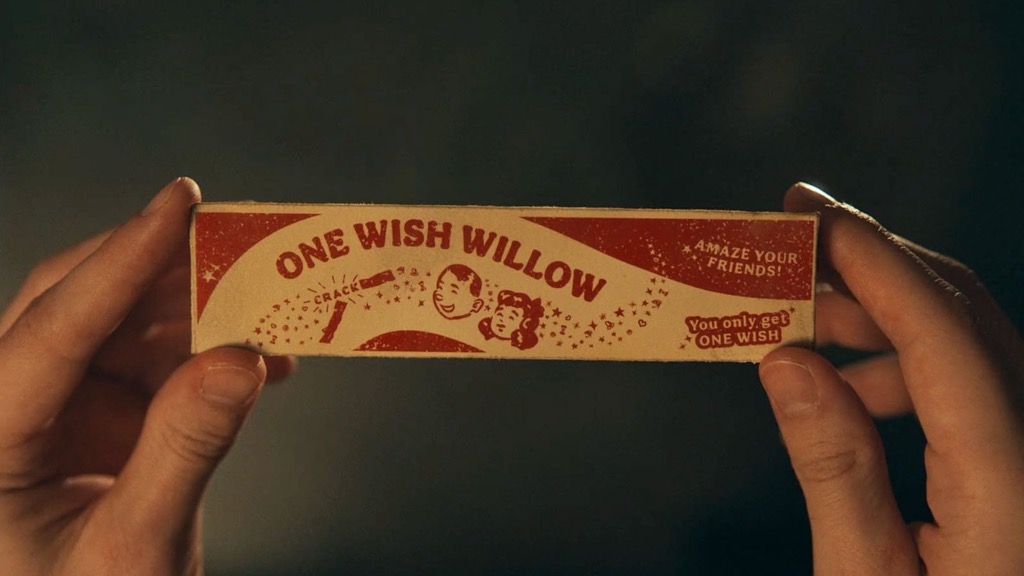
With the mainstream box office success of movies from young directors, like Obsession and Backrooms, we’re now seeing a lot of stories concentrating on a seismic shift in the film industry. We’re finally seeing new voices break into the mainstream! Independent filmmakers are earning huge rewards from committing to their personal and unique vision! The Old Guard is having to learn to keep up, and finally accept that they can’t just keep capitalizing on the nostalgia of 40-50 year olds!
Of course, the reality is that the business is working pretty much the same as it always has. What’s being presented as a “seismic shift” is just a shuffling of the names of people at the top who are making a profit.
From Rob Hatch-Miller on Bluesky, I saw a link to an article in The Hollywood Reporter titled “Meet the Obsession Producers: Tea Shop Productions.” It talks about the two guys who built up an independent production company taking risks and working outside the system. They took a gamble on an up-and-coming young YouTuber, and that (estimated) $750k bet turned into an (estimated) $250 million payout.
Meanwhile, the Instagram account of an Art Director on Obsession has a post describing how much they made from working on the film, and how much work they put into it. It shouldn’t come as a surprise to anyone that it wasn’t a huge payout, even by contract hire standards, and especially not when factoring in the various expenses that get absorbed by small crews. Teams on smaller projects — whether they’re films, which I know next to nothing about, or video games, which I know first-hand — often do work outside their job description, don’t get compensated for travel time or expenses, and generally put a lot of extra time and effort into a project without its being all that remarkable. They usually do it because they believe in the project, and even if they don’t, it’s work that has to get done anyway.
It also shouldn’t come as a surprise to anyone that any mention of this I’ve seen on social media has immediately had some dipshit responding with the long-familiar and completely expected nonsense. “You agreed to the rate.” “Most movies don’t see anywhere near this kind of success.” “The people who take the biggest risks are always going to get the highest rewards.” “Grow up.”
It’s expected, because it’s the fundamental mantra of capitalism that people have been repeating since long before I was born and will keep repeating long after I’m dead. You have to believe that exceptional wealth is the result of exceptional talent and insight, or else the whole system falls apart, and that’s how you end up with socialism.
That part’s not realistically going to change anytime soon. But the eagerness of assholes to come out swinging with “Suck it up, buttercup!” just shows the degree that people have accepted it as a basic truth without putting any thought into it. The unexamined confidence-turned-into-arrogance of someone insisting, “Well of course you don’t feel well. You drink pasteurized milk!“
Obviously, it offends me as an idealist. But it irritates me even more as a cynic. Because it’s just so dumb, unnecessary, and unrealistic, that it doesn’t even make business sense, much less common sense.
It’s tempting to call those producers the greedy bad guys, or at least a bit hypocritical for being guys in their 40s being credited for young indie upstart success. I don’t have any idea one way or the other; I don’t have any idea what it takes to run their business. I’m just extremely skeptical that such an extraordinarily high return on investment would leave them just breaking even.
It’s also tempting to look at all of the interviews and profiles of Curry Barker, and hear people complimenting him on his next movie and his TV series in development and the Texas Chainsaw Massacre, and shake your tiny fist at yet another now-wealthy white guy coasting on other people’s work, and now pulling up the ladder behind him. I don’t have much indication that that’s true, either. And it doesn’t change the basic fact that making something that resonates with people and is financially successful should get you the opportunity to make more stuff.
You don’t have to be sneering at villains and quoting Karl Marx and staging a collective overthrow of the independent film industry to understand that this is just plain bad optics. This movie is an exceptional case. And the handling of the business side of it should be as exceptional as well.
Even if you didn’t believe or didn’t understand how it’s fair, it would be just plain good PR to give everybody who worked on the movie a bonus. And it would likely be ludicrously cheap when compared to all the money that has been spent promoting the movie, and how much money it’s made. A tiny amount in movie-budget terms could be life-changing for the people who worked on it, at least for a while until they get on their next project.
And what makes the disparity even more needlessly stupid is that giving some form of profit-sharing bonus to the crew would obviously be so much more sustainable for the business!
Any time you talk about income or wealth disparity, the chucklehead response always describes it as the investors being the only ones who take all the risk. Even when a person who worked on a film gives them a full account, in detail, with dollar amounts, of all the risks they took to help make it.
The only way you can get low- or even limited-budget projects to happen is if people put in extra time and effort because they believe in the project. (Or even if they simply need the work). I would hope that it’s obvious to even the stupidest person that people won’t have much reason to keep pouring themselves into projects if they’re not entitled to anything should the project become a breakout hit.
And even if that’s not obvious, it should at least be obvious that people can’t afford to keep doing that. If my putting exceptional time and effort into a project has absolutely no chance of compensating me beyond the minimum required up-front payment, then I’m simply going to have to give every project my absolute minimum of time and effort. No matter how much I “believe” in the project.
Ask me how I realized this!
Part of the reason I don’t like paying attention to the financial side of movie and game industry news is that it’s astounding and dispiriting to see how much money is involved. Movies often lose tens or even hundreds of millions of dollars, and yet they rarely bankrupt the studios or end the careers of anyone involved. Even describing the investments as “risk” seems completely absurd, when you can take pretty much any high-profile person in the movie industry and find at least one colossal flop that they’ve been attached to, but they’re still at the top of their field.
One of the things I realized while watching the intellectual, cultural, and cinematic vacuum that was Masters of the Universe was that the people sitting behind me, who sounded like they were enjoying the hell out of it, were so much more invested than anyone involved in the movie’s creation. I never felt like anyone was taking a risk, any more than I felt like He-Man just might lose this fight, you guys!
It’s a (literally) commercial product from a movie-making business, which was careful to include plenty of shots of its toy lines (Mattel) and a crucial shot of its Prime delivery truck (Amazon/MGM). Everyone who stood to make the most money from this movie went through extensive negotiations to make sure that they’d be adequately compensated, either up front, on the back end, or both. And knowing what I know about the current state of the VFX industry, I can all but guarantee that the people on the movie who took the most risk, in terms of time spent vs compensation, were the ones who made the countless effects shots for a set hourly rate.
In other words: the claim that the highest risk yields the highest reward is such a load of bullshit that you can consider it a pure fairy tale.
Independent films (and video games) do often require substantial risk from the people leading them and producing them. Of course they should see the benefits from that, should it end up being a breakout hit. But if you assume that well, obviously, the crew should be satisfied with initial compensation and nothing else, because that’s the deal, but also they should be prepared to take less money and put in extra effort because of Their Love Of The Art, then where’s the incentive?
Doing that is the surest way to budget smaller projects out of existence. If I’m only going to get the minimum compensation, then I’m going to put more effort into making sure the minimum compensation is enough to live comfortably. If I don’t get any career benefit from a hit, like the director does, then I’m going to make sure that I’m only working the minimum number of hours on it. Labor movements come from people feeling like they’re being exploited as labor, instead of respected and included as collaborators who are invested in the project.
Sharing the profits of a success — not to mention offering fair compensation up front, and paying people instead of using volunteers — isn’t some altruistic, benevolent gift. It’s simply the cost of doing business. You have to actually invest in the business for the business to be sustainable. Otherwise it’s not a “risk.” It’s taking advantage of the people who actually are making sacrifices, and then taking the profit that results from their sacrifices for yourself.
This is simple stuff, guys. It’s not naive or idealistic or realistic. It’s business. Grow up.
Comments
One response to “I Wish People Got Fairly Compensated”
I agree so much with your sentiment as someone trying to make it in the industry. I think so many people are quick to defend millionare/billionare investors/investment companies but not the actual low-income workers slaving away to put their hearts into producing a piece of art…and often they NEVER see any considerable value returned to them even if the film makes it big. It’s gross and not a way the arts should be.